
Last Updated: October 26, 2026
Quick Summary
Store metal comic covers upright in acid-free sleeves and boards sized to the book, with an acid-free separator between the metal surface and anything that touches it. Keep them in acid-free short boxes about two-thirds full, at 65 to 70 degrees and 40 to 50 percent humidity.
- Handle metal comic covers by the edges with clean, dry hands to avoid fingerprints and dull patches.
- Avoid PVC sleeves, adhesive tape, recycled corrugated cardboard, and rubber bands around metal finishes.
- Skip plain metal boxes, since rust particles can circulate and attach to comic staples.
- Never store a metal cover flat under other books or boxes, which causes dents over time.
- Use UV-filtered frames and keep displays out of direct sun and away from heat.
Table of Contents
- Why Metal Comic Covers Need Their Own Storage Rules
- Step 1: Handle and Inspect Metal Comic Covers Before Storage
- Step 2: Choose Comic Book Bags and Boards That Fit Metal Covers
- Step 3: Pick Comic Book Storage Boxes That Prevent Rust and Bending
- Step 4: Store Metal Covers Upright and Stack Within Safe Limits
- Step 5: Control Comic Book Humidity and Temperature
- How to Protect Foil Comic Covers and Metal Variants on Display
- Step 6: Label, Catalog, and Organize Your Metal Cover Collection
- Frequently Asked Questions
Why Metal Comic Covers Need Their Own Storage Rules
Metal comic covers are limited edition variants with a metal plate bonded over the standard cover, and they need different storage than paper comics. At Comics and Collectibles R Us, we have handled thousands of foil, embossed, and metal variants over four decades.
Here is the part most guides get wrong. A metal cover does not make the whole comic indestructible. Collectors on the CGC forums point out that metal covers can bend or scratch, which affects the grade.
Below, we walk through six storage steps, from handling to labeling, that keep metal variants in the condition you bought them in.
Step 1: Handle and Inspect Metal Comic Covers Before Storage
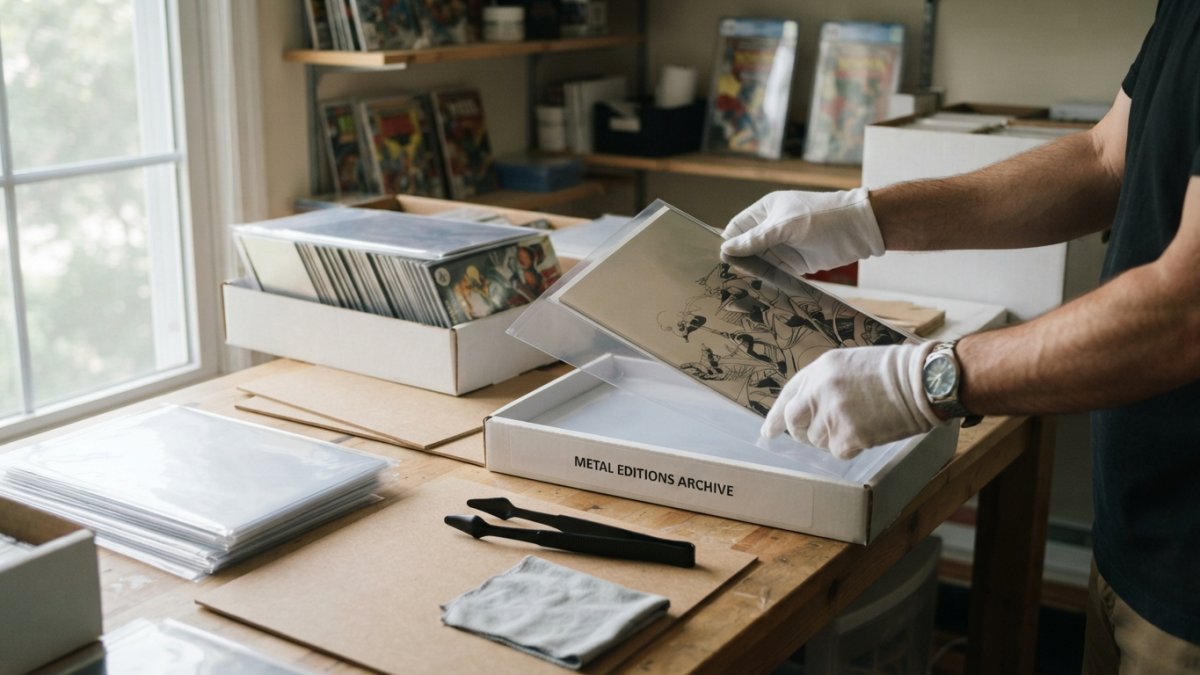
Start with clean, dry hands, and handle the book by its edges only. Oils from your fingers sit on a metal surface and show up later as dull patches or fingerprints that will not buff out.
Inspect before you store anything:
- Check the metal plate for scratches, dents, or lifting at the corners
- Look at the paper behind the plate for bends or spine stress
- Note any existing tarnish so you can tell later whether it is spreading
A common mistake is stacking a metal cover flat on a hard table while you inspect the paper. Set it on a soft, clean cloth instead. Small dents come from pressure, not from drops.
Step 2: Choose Comic Book Bags and Boards That Fit Metal Covers
You need a sleeve and backing board sized to the actual book, not the standard comic size. Metal and variant covers often run thicker or slightly larger, so a tight poly bag puts pressure right on the plate.
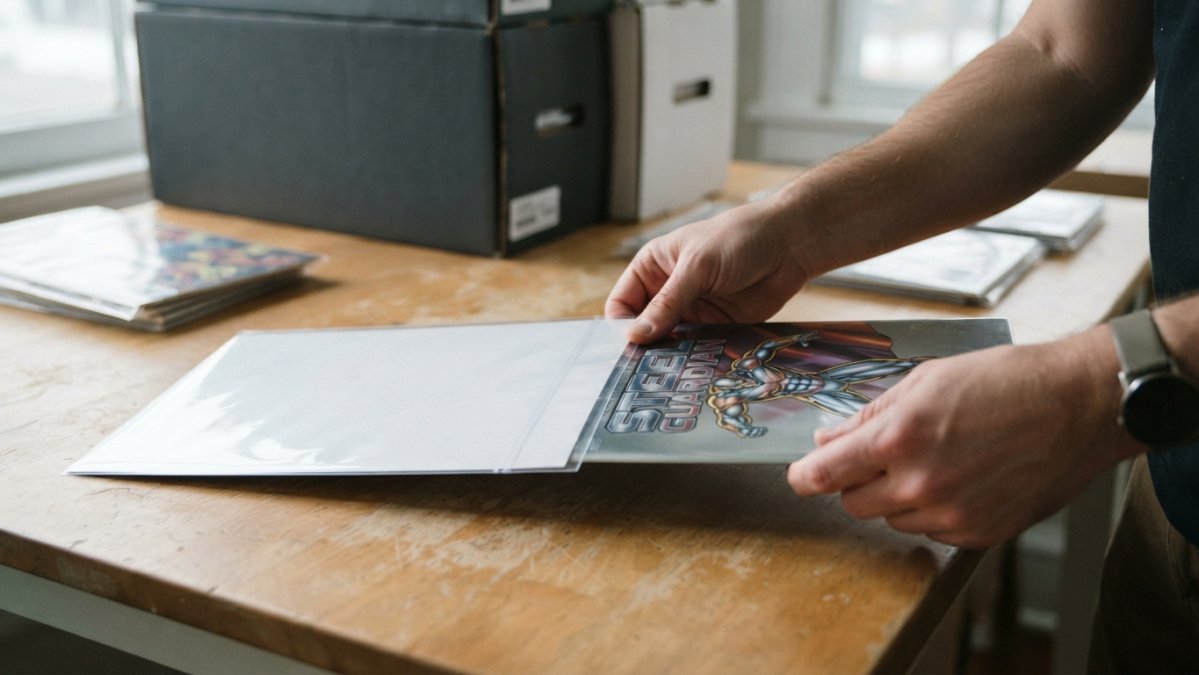
Use acid-free, archival materials. If you want a side-by-side look at the options, our best comic cover protection supplies buying guide compares sleeves, boards, and separators.
Sleeves, Interleaving, and Separators for Metal Surfaces
Metal plates scratch against each other and against cardboard. Interleaving solves this. Place a sheet of acid-free paper or a thin archival separator between the metal surface and anything that touches it. Never let two metal covers rest face to face without a barrier. The friction from sliding one against the other leaves fine scratches that show under light.
This is where metal covers diverge from paper comics, and most guides skip it entirely. A paper cover tolerates a snug poly bag; a coated or foil-stamped metal plate does not.
A practical layering order that protects both materials:
- Backing board behind the book, acid-free and sized to the book.
- Book inside the sleeve, spine centered, no pressure on the plate.
- A thin acid-free separator between the metal face and the next book or board.
- Sleeve flap folded, not taped, so no adhesive touches the cover.
Materials to Avoid Around Metal Finishes
Not every "protective" material is safe for a metal plate. A common pattern among collectors who store metal variants long term is to avoid:
- PVC sleeves and pages, which can off-gas and leave a film on coated metal
- Adhesive tapes and sticky labels applied directly to the sleeve face over the cover
- Corrugated cardboard with visible recycled content or ink transfer, which can abrade a soft metal finish
- Rubber bands, which leave pressure marks and can react with some coatings
When in doubt, test a small, hidden corner of the sleeve against the cover for a few weeks before committing a valuable book to it. The goal is a barrier that touches the metal without reacting to it or rubbing it.
Step 3: Pick Comic Book Storage Boxes That Prevent Rust and Bending
Choose comic book storage boxes made of acid-free cardboard, and skip metal boxes unless they are galvanized and rust-free. A Reddit collector warns that rust particles inside a plain metal box can circulate and attach to comic staples.
Short boxes work better than long boxes for heavy metal variants. A short box limits how much weight presses on the bottom books. If you use a long box, do not fill it end to end with metal covers. Mix in lighter standard issues to spread the load.
Weight, Load Limits, and Pressure Points
A metal cover adds real weight to a book, and that weight compounds down a stack.
Orientation matters too. Stand books upright, spine down, supported by the backing board, with the box packed firmly enough that books cannot lean. A loosely packed box lets books slide and the metal edges grind against each other. A box packed too tightly bows the boards and transfers pressure to the covers.
FRIDAY THE 13TH PART 2 JASON TRIBUTE 4 LAYER METAL BY SCOTT STRAKA LTD 6 W/COA →
Preventing Corrosion and Tarnish Inside the Box
Metal covers are vulnerable to corrosion and tarnish in a way paper covers are not. The mechanism is straightforward: moisture in the air, combined with oxygen and any surface contamination from handling, drives oxidation on exposed metal. The fix is to keep the box environment dry and stable and to keep bare metal from touching reactive materials.
Practical steps that fit inside the box:
- Line the box bottom with acid-free board so books do not rest on bare corrugated cardboard.
- Keep a hygrometer near the boxes and hold relative humidity in the 40 to 50 percent range.
- Avoid storing boxes against exterior walls, on concrete floors, or in garages where humidity swings.
- Inspect metal covers periodically for early tarnish and isolate any book that shows it so the condition does not spread to neighbors.
A silica gel packet in a closed box can help buffer short-term humidity swings, but it is not a substitute for a stable room. Replace or recharge it on a schedule, and never let a packet touch a book directly.
Step 4: Store Metal Covers Upright and Stack Within Safe Limits
Stand comic books upright in the box, spine down and supported by the boards. Leaning stacks cause bending and warping over time, and metal plates do not spring back the way paper does.
Watch the weight. A metal cover is heavier than a standard issue, so a full box of them puts real pressure on the bottom book. Cap metal-heavy boxes at about two-thirds full. If you stack boxes, keep heavy ones low and never stack more than two high. The load limit matters more than most collectors realize.
Step 5: Control Comic Book Humidity and Temperature
Keep your collection at room temperature, roughly 65 to 70 degrees, with relative humidity around 40 to 50 percent. That range slows corrosion on metal and keeps paper from warping. The National Park Service publishes guidance on storing paper and metal collections that supports staying in a stable, moderate range.
Three things to avoid:
- Direct sunlight, which fades covers and heats the metal
- Damp basements and garages, where humidity swings
- Heaters and radiators, which dry out paper and speed tarnish
A simple hygrometer costs little and tells you what your storage room is actually doing. Stable beats perfect every time.
How to Protect Foil Comic Covers and Metal Variants on Display
Display is where metal and foil covers take the most damage. Sunlight fades the art, dust settles into the surface, and handling during rearranging adds scratches.
Display rules that work:
- Use UV-filtered frames or cases
- Keep displays out of direct sun and away from heat
- Dust with a soft, dry cloth, never a wet one
- Handle the book by the edges when you swap it out
If you want to see how a properly protected metal variant looks, our Friday the 13th Part 2 Jason tribute 4-layer metal cover is a good example of the format. The Library of Congress preservation guidance on light and environment is worth reading before you hang anything valuable.

Step 6: Label, Catalog, and Organize Your Metal Cover Collection
Organize by series, genre, or issue number, then label every box and sleeve. A catalog saves you from re-handling books to check what you own, and every handling is a chance for a scratch.
What to record for each metal cover:
- Title, issue, and variant type
- Condition notes and any existing flaws
- Storage location, box, and slot
If you are adding graded books to the collection, our guide on how to purchase authenticated graded comic books walks through the buying side. And if you are weighing whether to grade a metal variant at all, read is comic book grading worth it first.
| Step | What You Do | Why It Matters |
|---|---|---|
| 1. Handle and inspect | Clean hands, edges only, note flaws | Prevents fingerprints and tracks damage |
| 2. Bag and board | Acid-free sleeve, correct size, separator | Stops scratches and surface wear |
| 3. Choose boxes | Acid-free cardboard, short boxes | Avoids rust and weight damage |
| 4. Store upright | Spine down, two-thirds full max | Prevents bending and warping |
| 5. Control climate | 65-70 degrees, 40-50% humidity | Slows corrosion and fading |
| 6. Label and catalog | Record variant, condition, location | Cuts handling and lost books |
Metal variants reward careful storage more than any other format. The plate that makes them special is also the part that scratches, dents, and tarnishes fastest.
That is where we can help. Comics and Collectibles R Us has spent over 40 years sourcing authenticated, limited edition metal, foil, and embossed covers, with 40,000+ items in our collection and a team that knows how to ship them protected.
Frequently Asked Questions
Do metal comic covers need a bag and backing board?
Yes. A metal cover still has a printed paper book behind it, and that paper is vulnerable to dust, fingerprints, and bending. Use an acid-free sleeve sized to the book plus a rigid acid-free backing board. The sleeve keeps dust and skin oils off the metal surface, and the board stops the cover from flexing. Check that the sleeve is not so tight that it presses on the metal edges, since pressure points are where scratches and dents start.
Can metal-cover comics be stored in standard comic book storage boxes?
They can, with two conditions. First, the box must be acid-free and free of rust, so avoid any metal box that is not galvanized or already shows corrosion. Second, metal covers are heavier than standard books, so keep stacks shallow and store books upright rather than piling weight on the bottom copies. A short box works better than a long box for a small metal-cover run because it limits how much weight leans on the end books.
What is the safest way to prevent scratches on a metal comic cover?
Handle the book by its edges only, never drag it across a surface, and never stack a metal cover directly against another metal cover. Place an acid-free separator or backing board between them so the surfaces never touch. Keep the book in its sleeve whenever it is not being inspected, and store it away from loose grit or dust. If you display it, use a frame with a mat that keeps the metal off the glass.
What temperature and humidity are best for storing comic books?
Aim for room temperature around 65 to 70 degrees Fahrenheit and relative humidity between 40 and 50 percent. Keep the storage area out of direct sunlight and away from exterior walls, basements, and attics where swings are largest. Stable conditions matter as much as the target numbers, because repeated expansion and contraction is what warps boards and speeds up corrosion on metal surfaces.
