
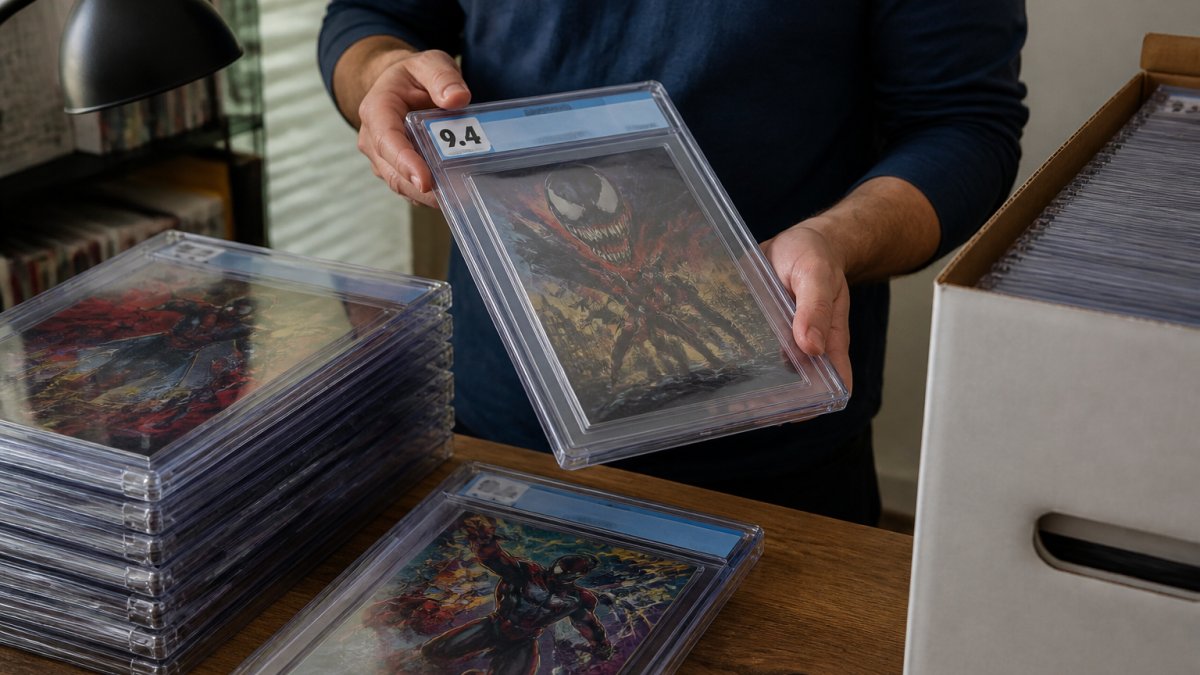
Last Updated: October 25, 2026
Quick Summary
Purchase authenticated graded comic books by verifying the CGC certification number on the grading service's website before you pay, confirming the grade, title, and label photo all match the slab in front of you. Research recent sold prices for the same issue and grade, then set a walk-away number before you bid.
- CGC assigns grades from 0.5 to 10.0 based on a visual review of the book's condition.
- CGC copies generally command stronger resale liquidity than CBCS copies at the same grade.
- A comparable is the same title, issue, grade, and label type sold within the last 90 days.
- Confirm the return window, return shipping costs, and whether the slab must stay sealed.
- Reputable sellers ship slabs in padded boxes with the book immobilized, not in a bubble mailer.
Table of Contents
- Why Authenticated Graded Comic Books Change the Buying Game
- CGC Comic Book Grades Explained Before You Spend a Dollar
- How to Verify a CGC Certification Number in Under Two Minutes
- Best Places to Buy Graded Comics Without Getting Burned
- Your Graded Comic Book Price Guide: Research Before You Bid
- Buyer Protection, Returns, and the Seller Risk You Can't Skip
- Shipping, Insurance, and Handling a Slabbed Comic the Right Way
- Build Your Graded Comic Collection With Comics and Collectibles R Us
- Frequently Asked Questions
Why Authenticated Graded Comic Books Change the Buying Game
GPAnalysis tracked more than $6.0 million in CGC-graded comic, magazine, and pulp sales across 22,503 individual books sold through major online marketplaces, according to Collecting Comic Books in 2026.
At Comics and Collectibles R Us, we have spent over 40 years helping collectors separate genuine slabs from hopeful claims. The difference matters.
Below, we walk through the seven-step process we would use ourselves, from reading the label to handling the slab. If you are still weighing whether grading is worth the cost, our guide on whether comic book grading is worth it covers the value question in more depth.
CGC Comic Book Grades Explained Before You Spend a Dollar
CGC comic book grades explained simply: the Certified Guaranty Company assigns a number from 0.5 to 10.0 based on a visual review of the book's condition. That number is the single most important input into price.
What the 10-Point Scale Actually Tells You
A 9.8 means near-perfect with only minor printing or handling flaws. A 9.0 shows light wear. Anything at 8.0 or below carries visible defects, and the price drops sharply with each half-point. The scale is not linear in value. A 9.8 often sells for multiples of a 9.4 of the same issue.
CGC vs. CBCS: Two Labels, One Decision
CGC and CBCS both slab and grade books, and both are widely accepted. CGC dominates the marketplace and commands stronger resale liquidity. CBCS-certified comics often cost less for the same grade, which appeals to collectors buying for their own shelves rather than for resale. Pick based on your goal: liquidity favors CGC, value favors CBCS.
How to Verify a CGC Certification Number in Under Two Minutes
Verification is the step buyers skip, and it is the one that protects them. Every CGC slab carries a certification number on the label.
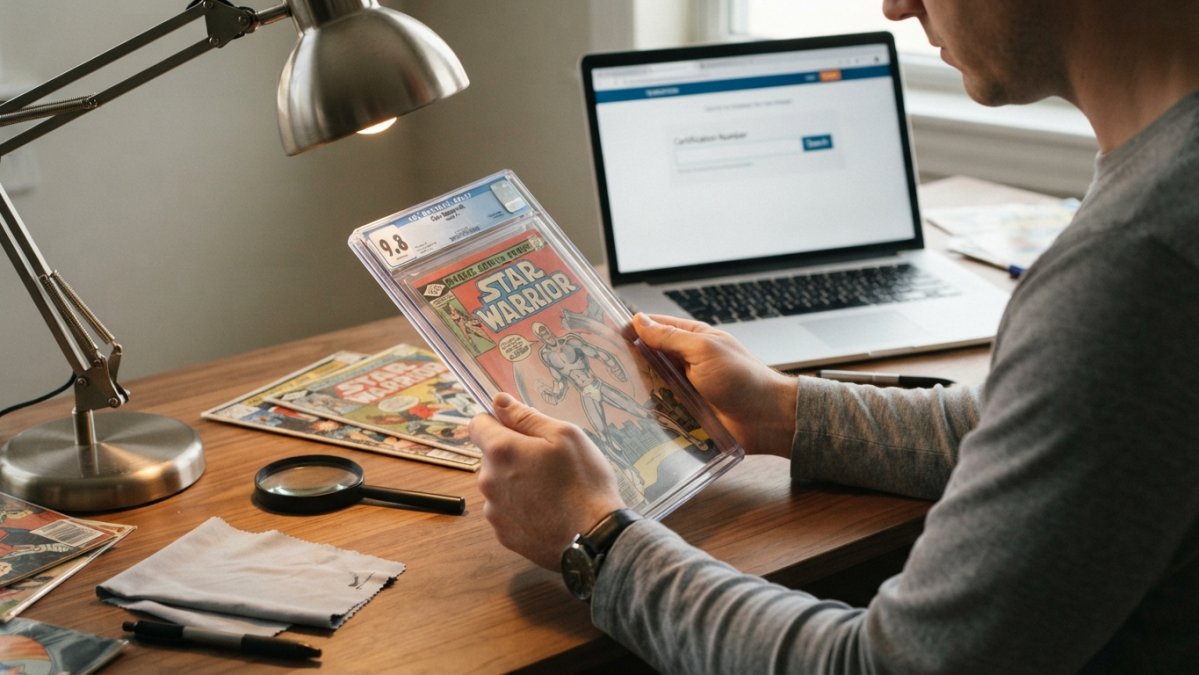
Check three things: the grade matches, the book title and issue match, and the label photo shows the same book. If any detail is off, walk away. A mismatched number is the clearest sign of a swapped or counterfeit slab.
Best Places to Buy Graded Comics Without Getting Burned
The best places to buy graded comics are established retailers with clear return policies, reputable auction houses, and marketplace sellers with long, verifiable feedback histories.
Retail storefronts like Walt's Comic Shop's graded comics section list in-stock and preorder slabbed books with fixed prices. That predictability is worth something.
Auctions vs. Buy-It-Now Listings
Auction listings reward patience and price research. Buy-it-now listings reward speed, especially on rare variants that sell out fast. One Reddit commenter noted that buy-it-now prices on eBay often sit above market value, with better deals found at auction. That is a fair observation, though it is one buyer's experience rather than a market rule.
| Channel | Price Behavior | Best For | Main Risk |
|---|---|---|---|
| Retail storefront | Fixed, at or near market | Beginners, guaranteed authenticity | Higher sticker price |
| Auction | Variable, can beat market | Patient, researched buyers | Overbidding in the moment |
| Buy-it-now | Often above market | Rare, fast-moving variants | Paying a premium for speed |
Your Graded Comic Book Price Guide: Research Before You Bid
A graded comic book price guide is only useful if you check recent sold prices, not asking prices. Anyone can list a 9.6 at an ambitious number. What matters is what comparable copies actually sold for in the last 30 to 90 days.
Here is the five-step price research process we recommend before you commit to any slab.
Step 1: Define the Comparable Set
A comparable is the same title, same issue, same grade, and same label type (CGC or CBCS) sold within the last 90 days. Variants, newsstand versus direct editions, and pedigree copies are not comparable to a standard copy even at the same grade. Write down the exact parameters before you search so you do not talk yourself into a bad match.
Step 2: Pull Three to Five Recent Sold Listings
Use the sold and completed filters on marketplace listings, and check auction house archives for higher-value books. Record the sale date, grade, label, and final price for each. If you cannot find three recent sales, the book is thinly traded and your price confidence should drop accordingly.
Step 3: Average, Then Adjust for Costs
Average the three to five sold prices to get a baseline. Then subtract shipping and any buyer's premium the buyer paid, because those costs are part of the real out-the-door price. That adjusted number is your ceiling, not the sticker price.
Keep a simple spreadsheet with columns for date, title, issue, grade, label, sale price, shipping, and premium. After a few purchases you will have your own sold comps that are more relevant to your collecting focus than any generic guide.
Step 4: Sanity-Check Against Market Reports
CovrPrice publishes monthly CGC top sales reports tracking top graded sales by era, which gives you a market pulse before you commit. Compare that data against the seller's asking price, and you will know within minutes whether a listing is fair. GPAnalysis is another commonly used source for historical graded sales; use it to confirm trends rather than to price a single book.
Step 5: Decide Your Walk-Away Number Before You Bid
Write your ceiling down before you open the listing. Auction psychology is real, and the easiest way to overpay is to decide your limit while the bidding is live. If the price crosses your number, let it go. Another copy will come to market.
What Moves a Graded Price Beyond the Grade
Grade is the biggest input, but it is not the only one. Edition matters: a first appearance or key issue in a 9.4 can outsell a common issue in a 9.8. Label type matters: CGC copies generally command stronger resale liquidity than CBCS copies at the same grade.
A Worked Example of the Math
Suppose three recent sales of the same issue in a 9.6 CGC slab closed at $180, $195, and $210. The average is $195. If the buyer paid $15 shipping on each and the auction house charged a 20% buyer's premium on one of them, your adjusted ceiling is lower than the average sticker. Set your walk-away number below the average and treat anything above it as a pass.
Buyer Protection, Returns, and the Seller Risk You Can't Skip
Third-party grading is not a seller's guarantee. Buyers of third-party graded comics accept that the store is not responsible for the grade assigned by the certification company. Read that twice. The grade belongs to the grading service, not the retailer. That distinction is why buyer protection has to be part of your purchase plan, not an afterthought.
The Pre-Purchase Seller Checklist
Before you pay, confirm five things in writing (a listing description or message thread counts):
- The return window in days, and whether it starts on delivery or on order.
- Who pays return shipping if you send the book back.
- Whether the slab must remain sealed for a return to be accepted.
- Whether the seller will provide additional photos of the label and the slab corners on request.
- The seller's feedback history and how long they have been active on the platform.
A seller who will not answer these questions before a sale is telling you something about how they will behave after one.
Payment Methods That Actually Protect You
Pay with a method that offers a dispute process. Credit cards and major platform payment systems generally provide chargeback or dispute rights; peer-to-peer transfers and cash-equivalent methods generally do not. If a private seller insists on a payment method with no recourse, treat that as a red flag regardless of how good the price looks.
A deal that requires you to give up buyer protection to get the price is not a deal. The discount is compensation for risk you are taking on, and it is rarely worth it on a high-value slab.
Counterfeit and Swapped-Slab Red Flags
A mismatched certification number is the clearest sign of a swapped or counterfeit slab, but it is not the only one. Watch for:
- A label that looks reprinted, misaligned, or different in font from other labels from the same grading service.
- A slab that has been resealed, with visible glue, scuffing along the seam, or a holder that does not match the service's current design.
- A seller who refuses to show the certification number in photos or who crops the label out of listing images.
Run the certification number through the grading service's lookup before you pay, and compare the label photo to the book in the listing. If anything is off, walk away.
What to Do If a Slab Arrives Damaged
Inspect the package before you discard it, and photograph the unopened box, the packing materials, and the slab from multiple angles. If the holder is cracked or chipped, contact the seller immediately through the platform's message system so there is a record, and open a dispute if the seller does not respond within the platform's stated window.
Returns on Graded Books: What to Expect
Return policies on graded books are usually tighter than on raw comics, because a sealed slab is treated as a final sale once opened. Some sellers accept returns only for items that arrive damaged or not as described. Others offer a short window with the buyer paying return shipping.
Shipping, Insurance, and Handling a Slabbed Comic the Right Way
A slab is rigid, but it is not indestructible. Corners chip, and a cracked holder can cast doubt on the grade inside. Reputable sellers ship slabs in padded boxes with the book immobilized, not in a bubble mailer.
Ask two questions before checkout: is the shipment insured, and how is the slab secured inside the box? For high-value books, insurance is not optional. Track the package and inspect the slab the day it arrives, before you leave feedback or discard packaging.
Build Your Graded Comic Collection With Comics and Collectibles R Us
The collectors who do well are the ones who verify before they buy, research sold prices, and treat shipping and returns as part of the purchase, not an afterthought.
That is the standard we hold ourselves to.
Whether you are chasing a high-grade key issue or a limited metal variant, start with a conversation.
Frequently Asked Questions
How do you verify that a graded comic book is authentic?
Match the certification number printed on the slab's label against the grading company's online lookup tool, then confirm the title, grade, and label notes all line up. Check that the slab's tamper-evident seal is intact and that the label shows no signs of relabeling. Ask the seller for clear photos of the front and back of the case before you pay. A verified number plus an untouched seal is the strongest signal you can get before the book ships.
Are CGC-graded comics worth more than ungraded copies?
Often yes, but the premium depends on the grade and the book. A high-grade slabbed copy of a key issue typically sells for more than a raw copy because the grade is third-party verified and the book is protected. Lower-grade slabs may sell close to raw prices. Use recent sales data from a price guide or GPAnalysis-style tracker to compare slabbed and raw results for the exact issue before you assume a markup is fair.
What is the difference between a CGC and CBCS comic book grade?
Both use a 10-point scale and both encapsulate books in tamper-evident slabs, so a 9.0 from either company means roughly the same condition. The differences are in label design, turnaround times, and how each handles signature verification. CBCS offers witnessed and verified signature programs, while CGC has its own signature series. Buyers should verify the certification number through whichever company graded the book and confirm the label details match the listing.
Is it safe to buy graded comics online?
It can be, if you take three steps. First, verify the certification number on the grader's site. Second, buy from sellers with a documented reputation and a clear return policy. Third, pay with a method that offers buyer protection, such as a credit card or a marketplace with a dispute process. Ask about shipping materials too. A slab should arrive in a rigid mailer with padding, and any seller unwilling to describe their packaging is a risk.
