
Table of Contents
- Why a Rare Variant Comic Price Guide Beats Guesswork
- How to Identify a Rare Variant Comic Before You Price It
- Using a Comic Book Price Guide Without Getting Burned
- Ratio Variant Comics and Retailer Incentives Explained
- Comic Book Value by Condition: Raw Copies vs Graded Copies
- Reading Comic Book Sales History the Right Way
- Cover-Price Variants, Key Issues, and Era Rankings
- Where to Buy Rare Variants You Can Actually Verify
- Frequently Asked Questions
Last Updated: October 21, 2026
Why a Rare Variant Comic Price Guide Beats Guesswork
A rare variant comic price guide is a system for estimating what a specific limited edition book will actually sell for, based on identification details and comparable sold listings rather than gut feeling.
Here is the core problem with guesswork. Variant pricing runs on three separate variables: how many copies exist, how many collectors want one, and what grade the copy is in. Most guides collapse all three into a single number and call it market value.
Below, we break down exactly how to identify a variant, read sales history, and price a book with a repeatable method instead of a hunch.
How to Identify a Rare Variant Comic Before You Price It
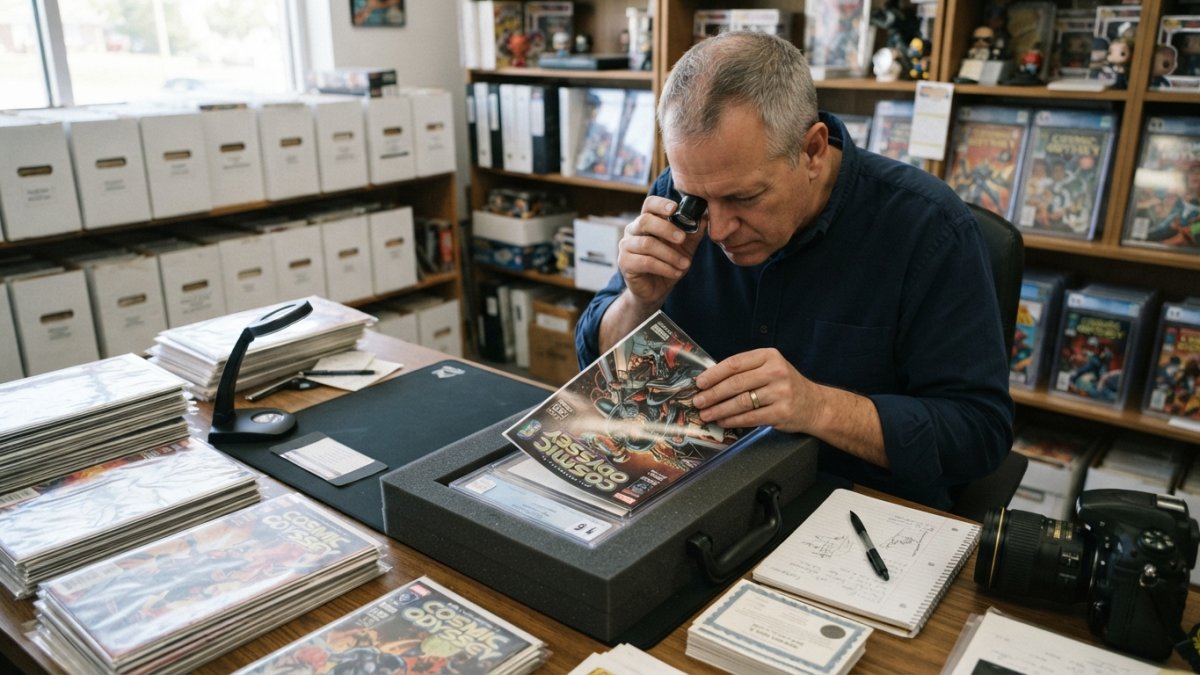
Identification comes first, because a variant priced as the wrong edition is worthless information. The fastest way to identify a rare variant comic is to compare four things against the standard edition: the indicia, the barcode, the cover price, and any edition statement printed inside.
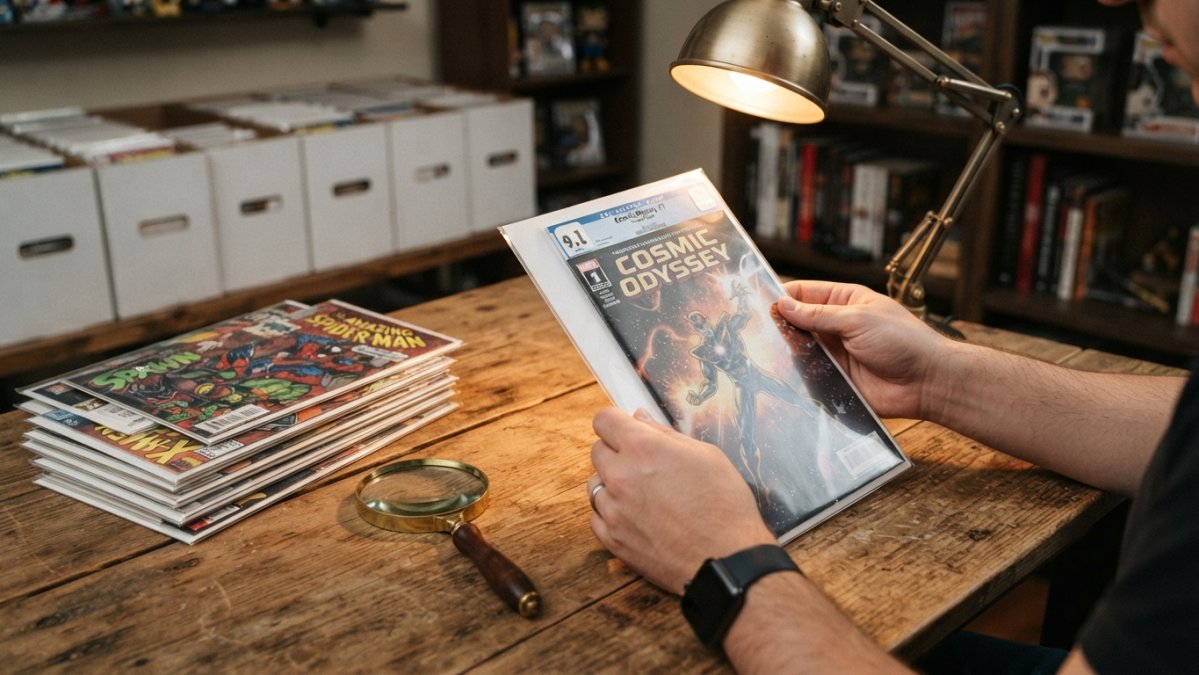
Most pricing mistakes start here. A collector sees a different cover, assumes it is the rare one, and never checks whether the interior indicia matches. Publishers routinely print variant covers on the same interior, so the indicia alone will not always separate them. The barcode will.
Indicia, Barcode, and Cover Price Clues
The indicia is the small text block, usually on the first interior page, listing the publisher, title, volume, issue number, and publication date. Use it to confirm you have the right series and printing.
The barcode is where editions diverge. Direct-market variants often carry a different barcode suffix than newsstand copies, and many retailer-exclusive variants replace the barcode entirely with a graphic or omit it.
Build a simple identification checklist and run every book through it:
- Indicia confirms publisher, title, volume, issue, and printing
- Barcode matches the variant, not the standard edition
- Cover price matches the known variant, including any price variant
- Edition statement or "limited to" note present inside or on the cover
- Certificate of authenticity included, if the publisher issued one
- Cover artist credited and cross-checked against the variant listing
Using a Comic Book Price Guide Without Getting Burned
A comic book price guide is a starting reference, not a verdict. Guides publish ranges, and those ranges lag the market by months.
Where guides earn their keep is in relative ranking. They tell you which issues in a run are considered keys and roughly how one variant sits against another. That context is genuinely useful.
Two habits keep you out of trouble. First, always check the guide's publication date and discount anything older than a year for modern variants. Second, cross-reference at least three recent sold listings before you settle on a number.
Ratio Variant Comics and Retailer Incentives Explained
Ratio variant comics are editions a publisher offers to retailers as a reward for ordering a set quantity of the standard cover. A 1:25 ratio variant means a store receives one copy for every 25 standard copies ordered. Retailer incentive variants work the same way, and the ratio is the single biggest driver of supply.
This is where the market gets misunderstood. A 1:100 ratio sounds scarce, and it is, but scarcity alone does not create value. If nobody wants the book, a low print run just means a small number of unsold copies sitting in long boxes.
Why Print Run Scarcity Is Not the Same as Demand
Print run scarcity describes how few copies exist. Demand describes how many collectors actively want one. Price is where those two forces meet, and they frequently disagree.
A ratio variant from a hot series with a strong cover artist can sell well above its ratio-implied scarcity because demand outruns supply. A lower-ratio variant from a series nobody is chasing can sit unsold for years. We see this constantly in our own inventory: the books that move are the ones with a story, a popular artist, or a first appearance attached, not simply the lowest print count.
Comic Book Value by Condition: Raw Copies vs Graded Copies
Comic book value by condition splits into two markets: raw copies and graded copies. A raw copy is ungraded and sold on the seller's description.
The gap between the two can be substantial, and it cuts both ways. A graded 9.8 copy of a desirable variant commands a clear premium because the grade is verified and the book is protected.
Grading costs money and takes time, so the decision is arithmetic. If the graded premium on a specific book exceeds the grading fee plus shipping plus your risk of a lower-than-expected grade, submit it. If not, sell raw and price honestly. For lower-value variants, grading rarely pays.
TEENAGE MUTANT NINJA TURTLES #6 VIRGIN VARIANT LTD 500 BY KEVIN DELGADO →
| Factor | Raw Copy | Graded Copy |
|---|---|---|
| Condition proof | Seller's word | Third-party numeric grade |
| Buyer confidence | Lower | Higher |
| Typical premium | Baseline | Higher for high grades |
| Upfront cost | None | Grading and shipping fees |
| Best for | Books under grading threshold | Keys and high-grade variants |
Reading Comic Book Sales History the Right Way
Comic book sales history is the only pricing input that reflects what buyers actually paid. Read it in three passes: filter by exact variant, filter by grade, then filter by date. A sold listing that matches on all three is worth more than a dozen asking prices.
Asking prices are noise. Anyone can list a book at any number. Completed sales are the signal, and the venue matters because different marketplaces attract different buyers. Auction results reflect competitive bidding on a given day; fixed-price sales reflect what a patient seller eventually accepted.
A Worked Example: Pricing One Limited Variant
Suppose you hold a virgin variant limited to 500 copies, signed by the cover artist, with a certificate of authenticity. Here is the method we use, step by step.

- Confirm the edition. Match the indicia, verify the "limited to 500" statement, and confirm the certificate.
- Establish the grade band. Inspect corners, spine, and staples. Assume raw Near Mint unless defects are visible.
- Pull three to five sold listings for the same variant in a comparable grade, ideally within the last six months.
- Discard outliers. One unusually high sale from a bidding war and one low sale from a mislabeled listing do not define the market.
- Set a range, not a number. If comparable sales cluster in a band, your book belongs inside that band, adjusted for signature and certificate.
- Adjust for your venue. Auction tends to realize competitive prices; fixed-price listings move slower but hold value.
A signed, certified copy of a 500-print variant should sit at the upper end of the comparable range, not above it. Buyers pay for verification, but they will not pay a premium the sold data does not support.
Cover-Price Variants, Key Issues, and Era Rankings
Key issues and era rankings give you the context a raw price cannot. A key issue is a book whose importance comes from a first appearance, a major storyline, or a creative milestone.
Era matters for how you read condition and supply. Silver Age and Bronze Age books survive in smaller numbers and grade more harshly, so high-grade copies are genuinely scarce.
| Era | Typical Supply | Variant Premium Driver |
|---|---|---|
| Silver Age | Low survival | Key status, high grade |
| Bronze Age | Moderate | Key status, ratio scarcity |
| Copper Age | Higher | Variant ratio, cover artist |
| Modern Age | Highest | Ratio, artist, certificate |
For Modern Age collecting, the ranking that matters is ratio depth, artist reputation, and whether the variant is a first print. A first-print 1:50 variant of a key issue is a different asset from a later reprint with a similar cover.
Where to Buy Rare Variants You Can Actually Verify
Verification is the whole game when you buy. A variant is only worth its premium if you can confirm the edition, the condition, and the authenticity of any signature.
At Comics and Collectibles R Us, we hold more than 40,000 items and authenticate collectibles through PSA, Beckett, JSA, or witnessed signings. Our exclusive limited edition variants include books like the Teenage Mutant Ninja Turtles #6 virgin variant limited to 500 by Kevin Delgado at $15.00 and the Teenage Mutant Ninja Turtles #9 virgin variant limited to 500 with COA at $30.00.

For signed books, the Department of Truth #29 signed virgin variant limited to 500 with COA by Kevin Delgado at $25.00 and the Vampirella #1 virgin variant limited to 500 with COA by Kevin Delgado at $25.00 show what proper documentation looks like in practice. If you prefer an unsigned entry point, the Teenage Mutant Ninja Turtles #6 trade dress limited to 700 by Kevin Delgado at $10.00 gives you a documented limited run at a lower cost.

Before you buy anywhere, ask three questions: is the print run stated, is the grade stated, and is the signature certified. A seller who cannot answer all three is asking you to take the risk.
Comics and Collectibles R Us has spent over 40 years helping collectors get this right.
Get a quote from Comics and Collectibles R Us and price your next variant with documentation behind it.
Frequently Asked Questions
Are variant comics worth anything?
Some are, most are not. A variant's worth comes down to three things: how many copies exist, how many collectors want that specific cover, and the condition of your copy. A limited variant with a print run of 500 can hold value well above its cover price, while an open-order variant from a large print run often sells near cover. Check recent sold listings for the exact edition, not just the series title, before you assume a number.
How do retailer incentive ratios affect a comic variant's value?
Ratio variant comics are tied to how many copies a store had to order to earn one copy of the variant. A 1:25 ratio means one variant per 25 standard copies ordered, so fewer copies reach the market than a 1:10 ratio. Higher ratios usually mean smaller supply, which supports higher prices when demand exists. The ratio alone does not set value, though. A 1:50 variant for a low-demand title can sell for less than a 1:10 variant for a hot series.
How does comic condition affect a rare variant's price?
Condition can swing a rare variant's price more than the variant itself. Comic book value by condition is steep: a Near Mint raw copy might sell for several times what a Very Fine copy brings, and a pressed, graded 9.8 can multiply that gap again. Spine ticks, color-breaking creases, and corner wear all pull the grade down. Get a raw copy pressed and graded before selling if the book is worth more than the grading cost.
Where can I find recent sales prices for comic variants?
Look at completed sold listings, not asking prices. Auction houses, graded census tools, and marketplace sold filters give you real sold prices with dates and grades. Record the sale venue, date, grade, and whether the copy was raw or graded. Three to five comparable sales from the last 90 days give you a defensible range. Asking prices on active listings tell you what sellers hope for, not what buyers pay.
How do I check the value of my comic book step by step?
Start by identifying the exact edition using the indicia, barcode, cover price, and any ratio or retailer label. Grade the condition honestly against a published scale. Then pull recent sold prices for that edition in that grade, and compare raw versus graded results. Adjust for print run size and current demand. Write your number down with the sources and dates so you can revisit it in a few months.