
Last Updated: October 30, 2026
Quick Summary
A good midtown comics alternative for collectors is a retailer that grades condition accurately, states honest inventory counts, and ships books bagged, boarded, and in rigid mailers. Look for a pull list service that sends final order cutoff notifications, explains allocation and hold rules, and combines shipping automatically. Comics and Collectibles R Us offers over 40 years of experience and more than 40,000 items.
- Collectors switch retailers over variant selection gaps, packaging and condition worries, and pull lists that need babysitting.
- A strong retailer always bags and boards books and ships in a rigid mailer with padding.
- Ask how a shop handles allocation on ratio variants and store exclusives before committing.
- Place a single test order before handing a long run to any pull list.
- Joe Comic's Monthly Comic Crate bundles five items for $59.99 but you don't choose the titles.
Table of Contents
- Why Collectors Look for a Midtown Comics Alternative
- What the Best Online Comic Book Stores Get Right
- Where to Buy Back Issue Comics Online Without Guesswork
- Comic Book Variant Covers Worth Chasing
- How a Comic Book Pull List Service Should Work
- Packaging, Grading, and Returns: What Protects Your Books
- Start Your Collection With Comics and Collectibles R Us
- Frequently Asked Questions
Why Collectors Look for a Midtown Comics Alternative
Collectors seek a Midtown Comics alternative for collectors because a single retailer rarely serves every kind of buyer equally well.
Here's the thing most buying guides skip: the problem usually isn't inventory size. The problem is what happens after you click buy. Does the book arrive flat and bagged, or does it arrive with a spine tick?
Below, we'll break down what separates a good online comic store from a frustrating one, and how to judge a comic retailer before you hand over your pull list.
What the Best Online Comic Book Stores Get Right
The best online comic book stores get three things right: accurate condition grading, honest inventory counts, and packaging that protects the books in transit.
A pull list service is a standing order arrangement where a retailer holds upcoming issues for a customer each month. That definition matters because the quality of a pull list depends entirely on the retailer's record-keeping, not its marketing.
Selection, Condition, and Shipping Compared
Selection is the easy part to advertise and the hardest part to verify. Any comic book store can claim a deep back-issue catalog. What you want to check is whether the listing states a grade, whether the photo is of the actual copy, and whether the seller uses industry grading language consistently.
Condition grading follows a recognized scale, and the CGC grading standards overview explains how the 0.5 to 10.0 scale is applied. A retailer that grades loosely will cost you money on resale.
Shipping is where online ordering often falls short. Compare these handling standards:
| Handling Factor | Weak Retailer | Strong Retailer |
|---|---|---|
| Bag and board | Sometimes | Always, before packing |
| Shipping method | Envelope, no rigid backing | Rigid mailer with padding |
| Combined orders | Separate boxes, separate fees | Combined shipping on holds |
| Damage policy | Case-by-case, slow | Stated replacement window |
Pricing and Total Order Cost
Cover price is only part of what you pay. Shipping fees, per-order handling charges, and the cost of a second order when something arrives damaged all count toward your real total.
Ask one question before committing: what does a typical monthly pull cost you, delivered?
Where to Buy Back Issue Comics Online Without Guesswork
Buying back issue comics online without guesswork means shopping where the listing tells you the grade, the printing, and the actual copy in hand. Vague listings are the single biggest source of collector disappointment.
Searchable inventory matters more than raw volume. When you're hunting a specific issue in a run, availability of key issues is the whole game.
Watch out: listings that show a stock photo instead of the actual book are a common way collectors end up with a copy that doesn't match the grade they expected.
Comic Book Variant Covers Worth Chasing
Variant covers are the alternative covers printed for a single issue, often in limited numbers, and they're the main reason collectors switch retailers.
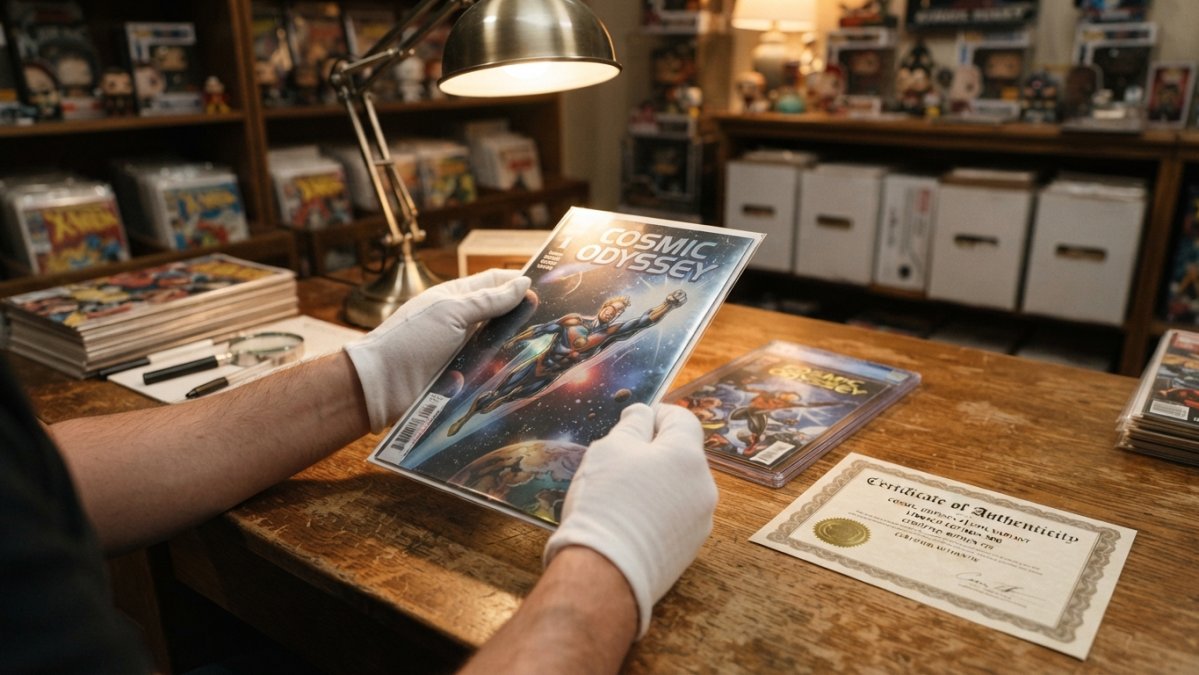
Limited print runs drive the chase. Here are examples from our own shelves:
- Department of Truth #29 signed virgin variant, limited to 500 copies with a COA, $25.00
- Godzilla #1 70th Anniversary foil, limited to 500, $25.00
- Vampirella #1 virgin variant, signed and limited to 500 with COA, $25.00
- Teenage Mutant Ninja Turtles #6 trade dress, limited to 700, $10.00
Before you chase any variant, learn to spot a fake and judge what a book is actually worth before you commit.
DEPARTMENT OF TRUTH #29 SIGNED VIRGIN VARIANT LTD 500 W/COA BY KEVIN DELGADO →


How a Comic Book Pull List Service Should Work
A pull list service should hold your requested titles automatically, notify you before the final order cutoff, and combine shipping so you're not paying per-issue postage. If you have to remind a retailer what you ordered, the system is broken.
The mechanics are simple on paper. You name the series and the specific covers you want, and the books accumulate until you request a shipment.
The Five Mechanics That Decide Whether a Pull List Works
- Final order cutoff (FOC) notifications. Publishers set a final order cutoff date, after which retailers must lock their orders. A strong pull-list system emails or texts you before that date with the exact titles and quantities on deck, so you can add, drop, or adjust. A weak system lets the cutoff pass silently and then tells you the issue sold out.
- Allocation and variant handling. Retailers do not always receive every copy they order, especially on ratio variants and store exclusives. Ask how the shop handles allocation: does it fill pull lists first, or does it list allocated books for open sale? A written policy beats a verbal promise.
- Hold duration and storage. Books sitting on hold for months need bag-and-board protection and a defined maximum hold period. Ask how long the shop will hold books before shipping or returning them to stock, and whether held books are stored bagged and boarded.
- Combined shipping rules. Confirm whether holds combine automatically, whether there is a minimum number of books before a shipment is triggered, and whether per-shipment handling fees apply. A shop that ships every issue individually can erase any cover-price discount.
- Cancellation and skip rules. Life happens. You should be able to skip a month, reduce quantities, or cancel a series without penalty. Get the policy in writing before you commit a long run to a list.
What to Ask Before You Hand Over a Pull List
Use this checklist as a script when you contact a retailer:
- What is your final order cutoff notification process, and how many days before cutoff do you send it?
- How do you handle allocation on ratio variants and store exclusives?
- How long will you hold books, and are they bagged and boarded while on hold?
- Do holds combine automatically, and what triggers a shipment?
- Can I skip a month or cancel a series without penalty?
- What happens if a book arrives damaged in a combined shipment?
A monthly crate is a simpler route if you'd rather not manage a list at all. Joe Comic's Monthly Comic Crate is one option to consider. Joe Comic's Monthly Comic Crate bundles one shop exclusive, three hot titles of the month, one ratio variant, and one foil for $59.99. It's a fixed cost with no list to babysit, but you trade control for convenience: you don't choose the titles, and you can't skip a specific series.
Packaging, Grading, and Returns: What Protects Your Books
Protection comes down to careful packing and a returns policy that covers damage in transit. Ask any retailer what it promises when a book arrives damaged, and how quickly it makes it right.
Packaging Standards to Look For
A collector-grade shipment usually includes:
- Bag and board on every individual book before it enters the box.
- Rigid backing, such as a corrugated pad or stiffener, on both sides of the stack.
- A rigid mailer or box, not a padded envelope, for any order containing a key issue or a book graded above a mid-grade raw copy.
- Tape and padding that keep books from shifting during transit.
- Combined-order packing that keeps held books protected rather than loose in a larger box.
If a listing or policy page does not describe packaging, ask before you order. A retailer that cannot describe its own packing standard is telling you something.
How to Compare Return and Buyer-Protection Policies
This is the comparison competitors skip. Evaluate any retailer on these five points:
- Stated damage window. How many days after delivery do you have to report damage? A clear window is better than a case-by-case promise.
- Remedy type. Does the retailer replace, refund, or offer store credit? Replacement is best for key issues, but only if the book is still in stock.
- Who pays return shipping. A policy that makes you pay return postage on a damaged book shifts the risk back to you.
- Condition disputes. If the grade on arrival does not match the listing, what is the process? Look for a policy that addresses grading disputes separately from shipping damage.
- Documentation requirements. Photos of the packaging and the book are commonly required. Know this before you open the box so you can document properly.
Professional grading is a separate decision from packaging. Whether to slab a book depends on its value and your plans for it. Packaging protects a raw book in transit; grading certifies its condition afterward. Treat them as two different decisions, and confirm the retailer's damage policy before you assume it covers a slabbed one.
Start Your Collection With Comics and Collectibles R Us
Building a collection without a retailer you trust is a grind. That's the gap we built Comics and Collectibles R Us to close.
We bring over 40 years of experience and more than 40,000 items to collectors who care about condition and authenticity. Our exclusive limited edition variants include metal, foil, and embossed covers. Our team offers personalized support for building pull lists, and we buy and sell collections for cash or store credit when you're ready to shift focus.
Get a quote from Comics and Collectibles R Us and start building a collection that holds its value.
Frequently Asked Questions
What should collectors compare when choosing a Midtown Comics alternative?
Compare four things: how the store lists condition and grading, how it packages and ships, whether it offers a pull list service for ongoing series, and the total order cost including shipping. A store with 40,000+ items and over 40 years of experience, like Comics and Collectibles R Us, can also source authenticated variants and signed books. Ask about returns for damaged or incorrect orders before you buy.
Where can collectors buy back issue comics online?
Look for a retailer that lists back issues with clear condition notes. Comics and Collectibles R Us offers a broad selection of comic books, exclusive variants, and memorabilia. Confirm the grading scale and return policy first, then build a want list for key issues.
Are comic book variant covers a good investment?
Limited variant covers can hold value when the print run is small and the book is authenticated. Comics and Collectibles R Us lists virgin and trade dress variants limited to 500 or 700 copies with COA, such as the Department of Truth #29 signed virgin variant at $25.00. Treat variants as a focused part of a collection, not a guaranteed return, and buy the books you want to keep.
How does a comic book pull list service work?
A pull list service reserves the ongoing series you name each month so you do not miss issues. Comics and Collectibles R Us offers personalized support for building pull lists, and the monthly Comic Crate at $59.99 bundles one exclusive, three hot titles, one ratio variant, and one foil. Confirm how the store handles skipped issues and cancellations before you commit.
How do I check the condition and authenticity of collectible comics?
Ask for the grading scale used, photos of the actual book, and a certificate of authenticity for signed or limited editions. Comics and Collectibles R Us offers authenticated collectibles, including limited edition covers with a COA. If a book arrives different from its listed grade, use the store's return policy rather than reselling it as-is. Ask about the store's return policy before you buy.
